
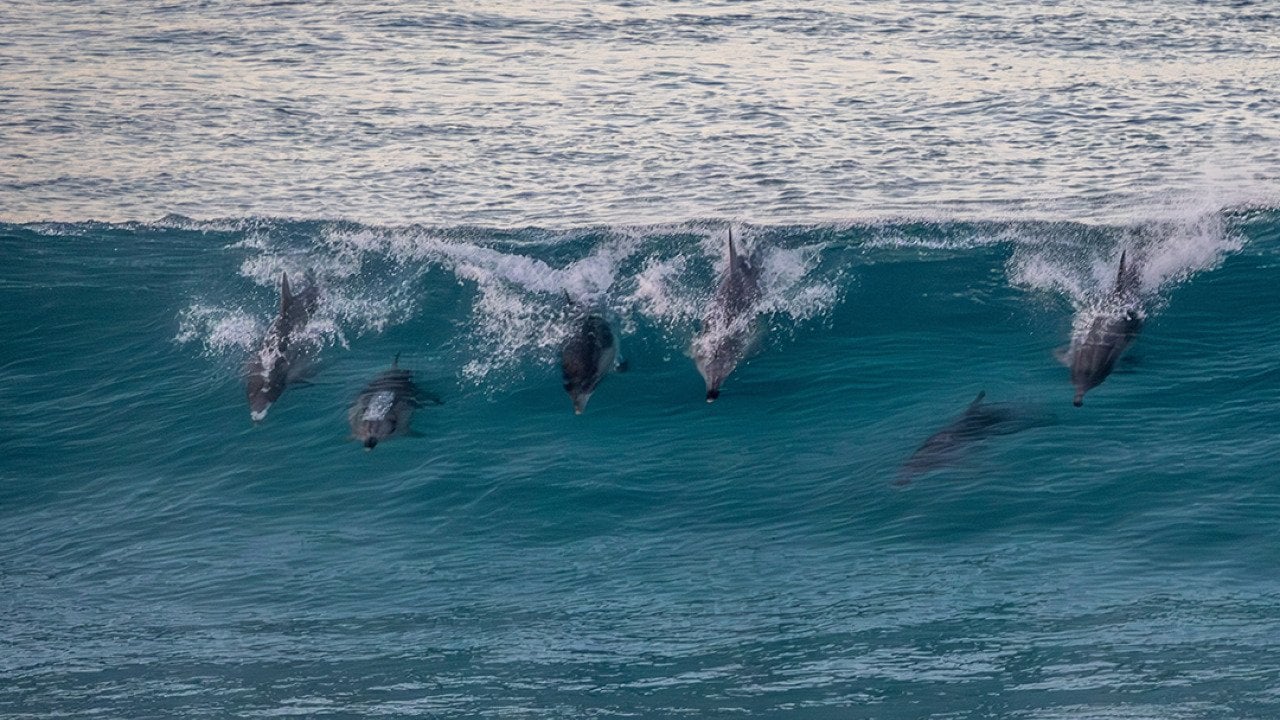
Leanne Irwin // Shutterstock
10 off-the-beaten-track Australian destinations worth seeing
Some of Australia’s most iconic landmarks, including the Great Barrier Reef, Sydney Opera House and Uluru, draw millions of visitors every single year. But ask an Aussie where they actually go on a long weekend, and their answer probably won’t show up in any guidebook. The country’s most rewarding experiences are found far from the tour-bus circuit, down unmarked coastal roads and through ancient mountain ranges.
In this guide, SIXT Australia shares 10 destinations that will reward travelers who are willing to get behind the wheel and take the scenic route.
1. Kangaroo Valley, New South Wales
Tucked between sandstone escarpments about two hours south of Sydney, Kangaroo Valley feels like a patchwork of rural England dropped into the Australian bush. Dairy farms and other homely stop-offs are dotted around the region, and the Kangaroo River winds through towering eucalypts. Keep an eye out for the 19th-century Hampden Bridge — one of the last surviving wooden suspension bridges in the country — which marks the entrance into town.
Locals and holidaymakers flock here for weekend kayaking, lazy pub lunches with valley views and the kind of quiet that the city simply can’t deliver. Most international visitors bypass it entirely on the motorway to Melbourne, never realizing that the slight detour through Macquarie Pass is one of the most scenic short drives in New South Wales. Make sure you stop at the Valley Fudge & Teahouse before crossing the bridge for a sweet pick-me-up after a long drive.
2. Yamba, New South Wales
At the mouth of the Clarence River on the northern New South Wales coast, Yamba is a laid-back beach town that locals have been selfishly keeping to themselves. Where northerly Byron Bay buzzes with influencers and staggering resort prices, Yamba sticks to its unhurried charm as an old-world surf village. Residents stick around for uncrowded point breaks at Angourie, fresh prawns straight off the trawler and sunsets from the Pacific Hotel beer garden that rival anything on the coast.
The drive from the nearest regional airport in Ballina takes about an hour along the Pacific Highway, but the slower inland route through sugarcane country will give you a much more authentic display of the surroundings. Get in on a Tuesday night, and you’ll be all set to mosey around the Yamba Farmers’ & Producers Market the next morning (7 a.m. to 11 a.m. on Wednesdays).
3. Flinders Ranges, South Australia
Rising from sunburnt plains approximately five hours north of Adelaide, the Flinders Ranges are an ancient geological formation, but also one of the least visited in the country. Wilpena Pound, a natural amphitheater of sprawling peaks, is the centerpiece and is ringed by walking trails that pass through landscapes virtually unchanged for millions of years. South Australians treat the Ranges as their outback playground, camping under some of the clearest night skies on the continent.
For American visitors used to Arizona and Utah, the scale feels familiar, but the solitude is on another level entirely. The lazy drive from Adelaide through the Clare Valley wine region makes it a rewarding journey in its own right. You might even want to book a scenic afternoon helicopter flight over Wilpena Pound for the perspective that your smartphone simply won’t be able to capture.
4. Bay of Fires, Tasmania
Tasmania’s northeast coast is resplendent with vivid orange lichen-covered granite boulders that are lapped by water so clear it could pass for the Caribbean. The Bay of Fires stretches for around 31 miles and is remarkably undeveloped, with no major resorts and only a handful of campgrounds and glamping retreats.
Tassie locals guard this coastline fiercely, and it’s never a surprise to hear it spoken about as one of the best coastal destinations. However, it barely registers on international itineraries that instead favor Hobart and Cradle Mountain. A rental car is the only real way to get to the bay. The good news is that the drive from Hobart tracks up the east coast through the seaside villages of Swansea and Bicheno, both of which are worth a stop. Don’t forget to pack a snorkel and head to Swimcart Beach at dawn when the first crack of sunlight turns the boulders a deep amber.
5. Esperance, Western Australia
If a beach could leave you speechless, it would likely be in Esperance. Lucky Bay, where kangaroos lounge on powder-white sand beside impossibly turquoise water, is an iconic Australian image, yet the town itself sits so far from anywhere that most visitors to Western Australia never make the trip. It makes sense when you consider the scale. Esperance is a nearly eight-hour drive southeast of Perth or a four-hour drive from the Goldfields town of Kalgoorlie, which means having a car is essential. West Australians treat the Great Ocean Drive, a 25-mile loop past a bounty of coastal sights, as a rite of passage.
There are no direct commercial flights unless you’re traveling straight from Perth, which keeps the interstate crowds thin even during the peak summer period. Drive the loop at dawn when the light hits Twilight Beach before stopping at the Esperance Stonehenge — a full-scale granite replica of the original.
6. Bright, Victoria
About three and a half hours northeast of Melbourne in the Victorian alpine region, Bright is a buzzing small town that changes with the seasons. Autumn brings a canopy of gold and crimson that rivals New England, while winter attracts skiers heading for nearby Mount Hotham and Falls Creek. In the warmer months, the Ovens River transforms into a popular swimming hole for families and the Murray to Mountains Rail Trail becomes dotted with eager cyclists from around the state.
Bright flies mostly under the radar for international visitors because it sits inland, far away from the Great Ocean Road routes that dominate Victorian tourism. If you get off the beaten track and take the more scenic drive from Melbourne through the Yarra Valley, you can stop in at wineries and be amazed by rolling farmland that seems to stretch on forever. Make sure you grab the pie of the day from Bright Brewery after a morning on the trail.
7. Agnes Water and Seventeen Seventy, Queensland
Named for the year Captain James Cook made landfall here, the tiny coastal settlement of Seventeen Seventy and its neighbor, Agnes Water, sit at the southern gateway to the Great Barrier Reef. While Cairns and the Whitsundays absorb the bulk of reef-bound tourists, this stretch of the Queensland coast serves up snorkeling, island day trips, sea-turtle encounters, and plenty of nightlife to go around — all with a fraction of the crowds.
Queenslanders know this as one of the last genuinely relaxed coastal communities in the state. It’s around a seven-hour drive north of Brisbane and a bit of a hike even once you leave the Bruce Highway, meaning visitors without a car rarely find their way here. The drive along the Queensland coast passes through Bundaberg and its famous rum distillery. Plenty of visitors book a 1770 LARC! tour where you’ll jump into an amphibious vehicle and cross tidal creeks to reach a secluded beach, with sandboarding and sightseeing on offer.
8. Robe, South Australia
On South Australia’s Limestone Coast, just under four hours’ drive southeast of Adelaide, the small fishing town of Robe has been a summer pilgrimage for Melbourne residents and Adelaide families for generations. The pick of where most of them spend their entire holiday? Long Beach, which stretches for almost 7.5 miles uninterrupted.
Robe’s history runs deep — it was once a major port for Chinese gold-rush migrants in the 1850s and ’60s, with more than 16,000 prospectors landing in Robe — but it’s never quite made it onto the international tourist circuit. The most scenic approach is via Coorong National Park, a large coastal lagoon system teeming with birdlife, which turns the drive into its own adventure.
9. Exmouth and Ningaloo Reef, Western Australia
For those in the know, Ningaloo is Australia’s other great reef and, in many ways, it outshines its famous Queensland counterpart. This 160-mile-long fringing reef is immediately off the shore (so there’s no boat trip required), and from March through August, whale sharks and hordes of manta rays cruise through its warm waters.
The gateway town of Exmouth lies on the remote North West Cape of Western Australia, a massive 13-hour drive north of Perth or a couple of hours’ flight to Learmonth before a short journey northwards. West Australians see this region as the crown jewel of their coastline, yet its distance from the east coast tourism hubs keeps international visitor numbers low. And that can only be a good thing for you.
10. Stanley, Tasmania
Dominated by The Nut — a towering volcanic plug that rises abruptly from the ocean — Stanley is a tiny fishing village on Tasmania’s northwest coast that feels suspended in time. Heritage cottages, a working wharf, and a population of fewer than 600 give it an atmosphere closer to a Scottish coastal hamlet than an Aussie township.
Hike or take the chairlift to the summit of The Nut for panoramic views across Bass Strait, then reward yourself with fresh seafood from one of the waterfront eateries. Stanley is around a 90-minute drive from Devonport, where the Spirit of Tasmania ferry docks, or about five hours from Hobart through the island’s scenic interior.
The best of Australia has never been confined to postcards and airport gift shops. Instead, you’ll find it down the road less traveled, in the towns where locals know the barista by name and the landscapes have stayed unchanged for millennia. What connects every destination on this list is that reaching them demands a willingness to get behind the wheel and follow the road a little further. With distances that dwarf most countries and public transport that thins out as soon as you leave the capital cities, a car is less a convenience in Australia than an essential to reach its most memorable locations.
This story was produced by SIXT Australia and reviewed and distributed by Stacker.

